Enjoyed the video and want to find out more? Why not read about our research into giant thunderstorms and forecast busts. Or explore the science of weather and climate through familiar ideas from physics.
Transcript
What should we wear? When should we harvest crops? Will trains run on time? Will A&E be busy?
So many things in life, big and small, are impacted by the weather.
But, it’s hard to believe that the forecast at your fingertips, when you tap the app on your phone, is the product of centuries of research.
By studying how air flows, how clouds form, how storms develop and more - over time, physicists have come to understand the laws that govern our atmosphere.
These laws are now written into computer simulators, which allow us to forecast future weather patterns. By feeding the details of today’s weather into these simulators, and running them forwards, over and over again, we can see when the weather might ruin a harvest, disrupt vital infrastructure, or present a threat to public safety.
Given the vastness and complexity of our atmosphere, our predictions are remarkably accurate… most of the time.
But, when forecasts go wrong, they can go very wrong.
These are called “forecast busts”, and they can have serious consequences.
That’s why a team of scientists from the Universities of Oxford and Reading, and the Met Office, are leading research into how weather events thousands of miles away can cause forecast busts here in the UK.
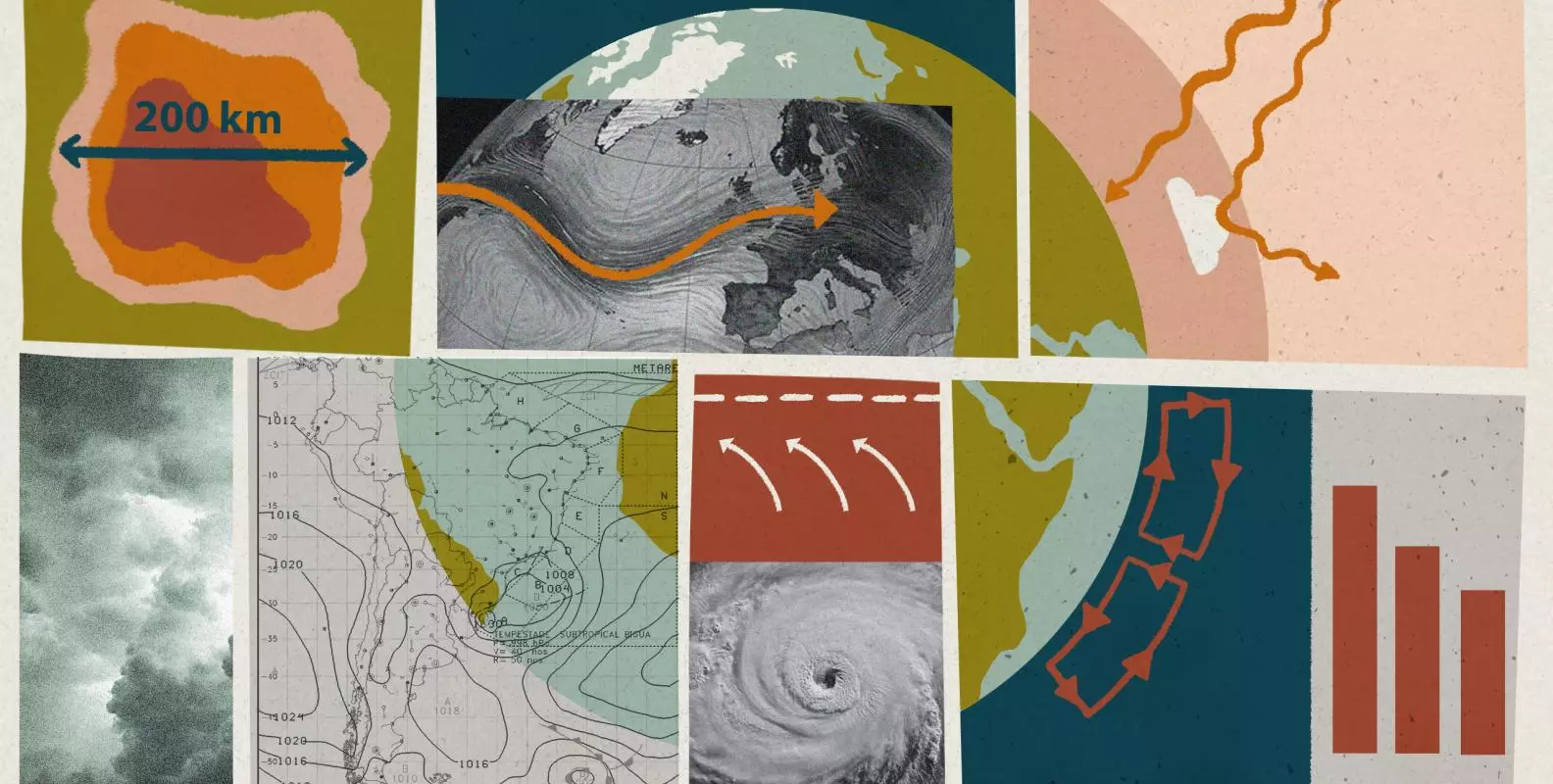
Giant thunderstorm systems over North America release a huge amount of energy. This can cause a wave on the jet stream - a band of air that flows high in the atmosphere. When that wave reaches the UK about a week later, it can make the difference between sunshine and rain.
But, until now, our computer simulators were unable to represent these thunderstorms well - think of a low-resolution image, too pixelated to make out the details. But, by building a stronger theory of the physics of these systems – and where and how they release their energy – we’ve been able to improve our simulators.
When we include these changes, the busts don't go away completely, but we better capture when and why one might occur.
It’s a reminder that physics and maths don’t just explain the world — they help us predict and protect it.
So, from theoretical ideas to real world results, climate science is physics in action.