Invisible waves in the sky: atmospheric gravity waves
When you hear the word wave, you might think of waves in the sea or sound waves travelling through the air. It might surprise you that there are also waves high up in the atmosphere. These are called atmospheric gravity waves. (They are different from gravitational waves in cosmology).
In GCSE Physics, we learn that waves need a medium to propagate through. For gravity waves, that medium is air. We also learn that waves transfer energy without transferring matter. As a gravity wave passes, air particles move up and down, but the particles themselves do not travel along with the wave. This transfers energy from near the surface to high up in the sky.
Atmospheric gravity waves form near the surface when air is displaced and gravity tries to restore balance. For example, imagine winds blowing towards a mountain. When the winds meet the mountain, the air is pushed upwards. Gravity then pulls the air back down. Because of this pull and push, the air begins to oscillate up and down. This creates a wave in the atmosphere.
The wave then moves upwards and away from where it was created. But higher up in the atmosphere, the air becomes less dense. This is important because as the wave travels through lower density air, its properties change. In particular, the wave’s amplitude increases, making the waves larger and easier to measure higher up in the atmosphere.
The wave itself moves energy upwards, (even though the air particles mainly move up and down around their original positions). This means energy is transferred from the lower atmosphere to much higher altitudes. High in the atmosphere, these waves eventually break, similar to the way that water waves break on a beach. When this happens, they transfer their energy into the surrounding air, changing the winds. Over time, this affects large-scale weather systems.
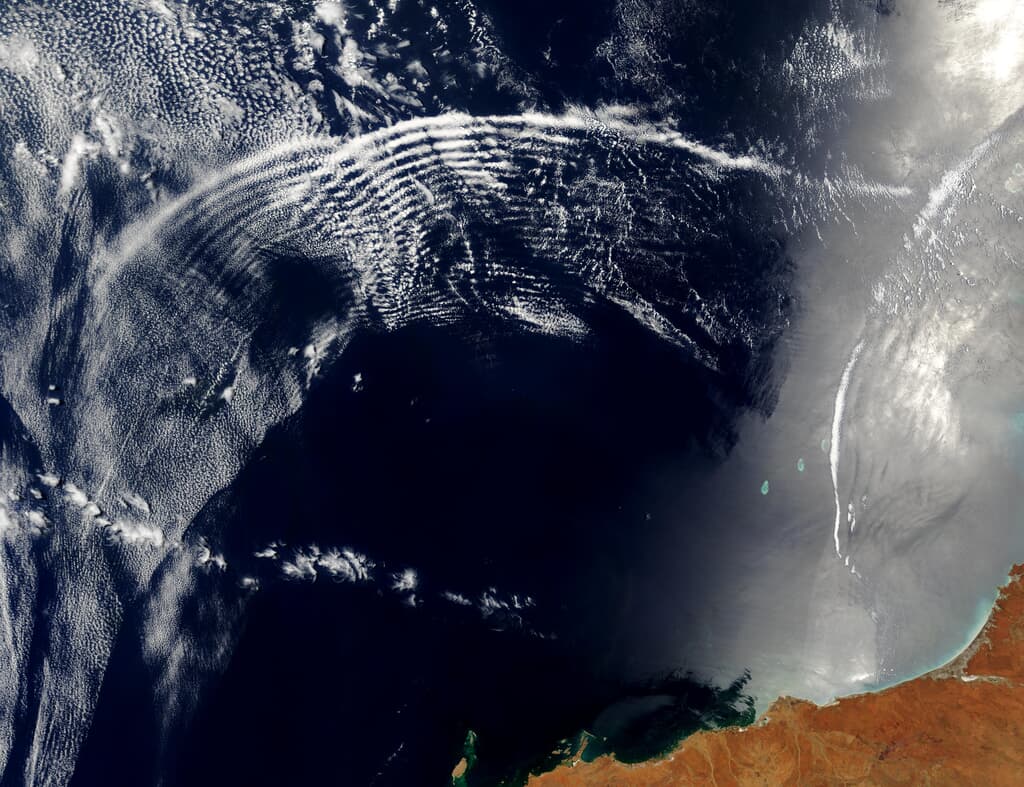
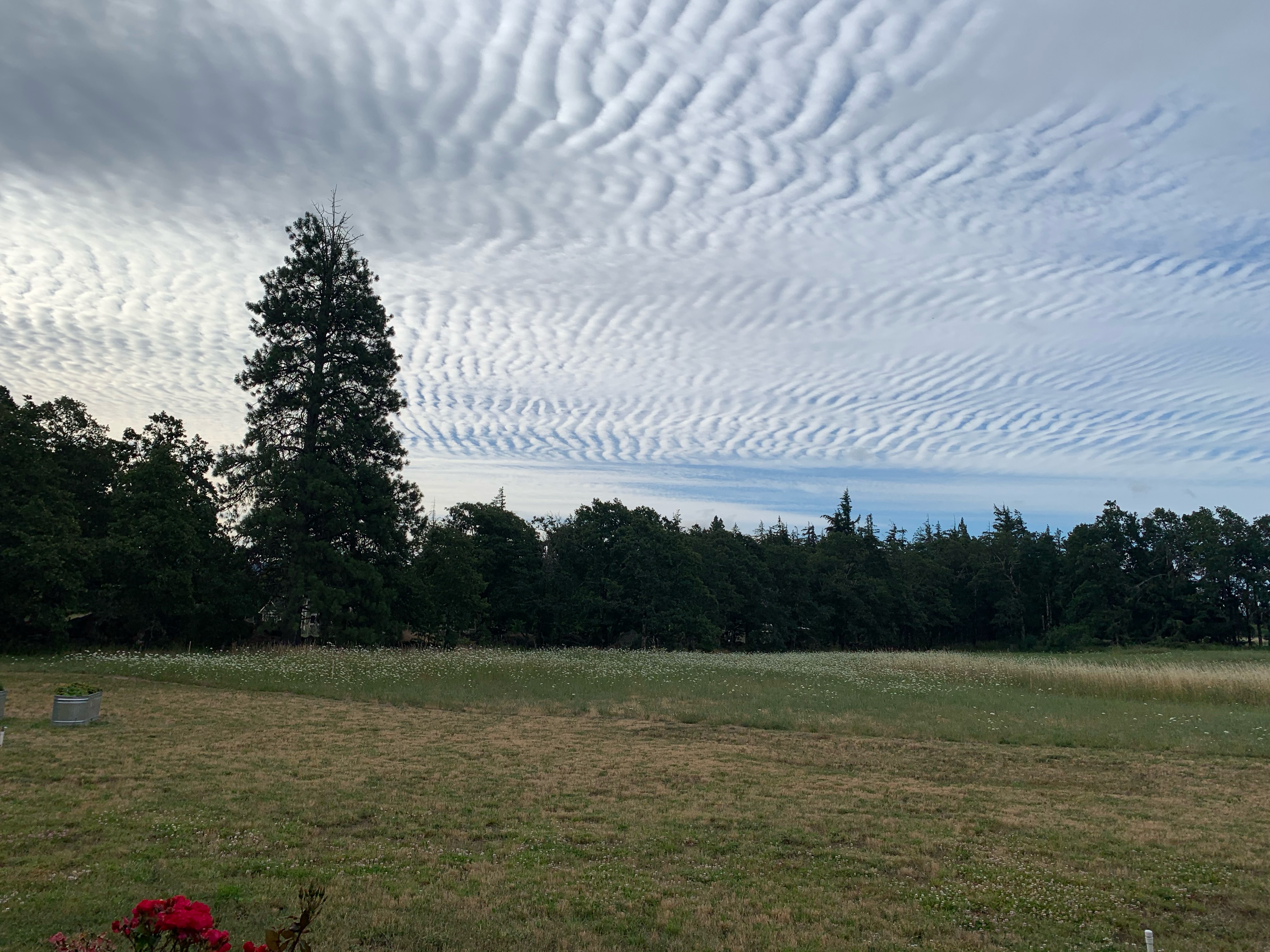
Atmospheric gravity waves are usually invisible, but sometimes they can be seen in cloud patterns. Look out for cloud formations that have ripples showing where air is oscillating up and down.
Physics has already helped us understand a lot about atmospheric gravity waves. But because they are invisible, there is still a lot we don’t know about them. If we can better understand them, we may be able to improve our predictions of weather systems.
Laura Mansfield,
AI in Science postdoctoral fellow,
University of Oxford