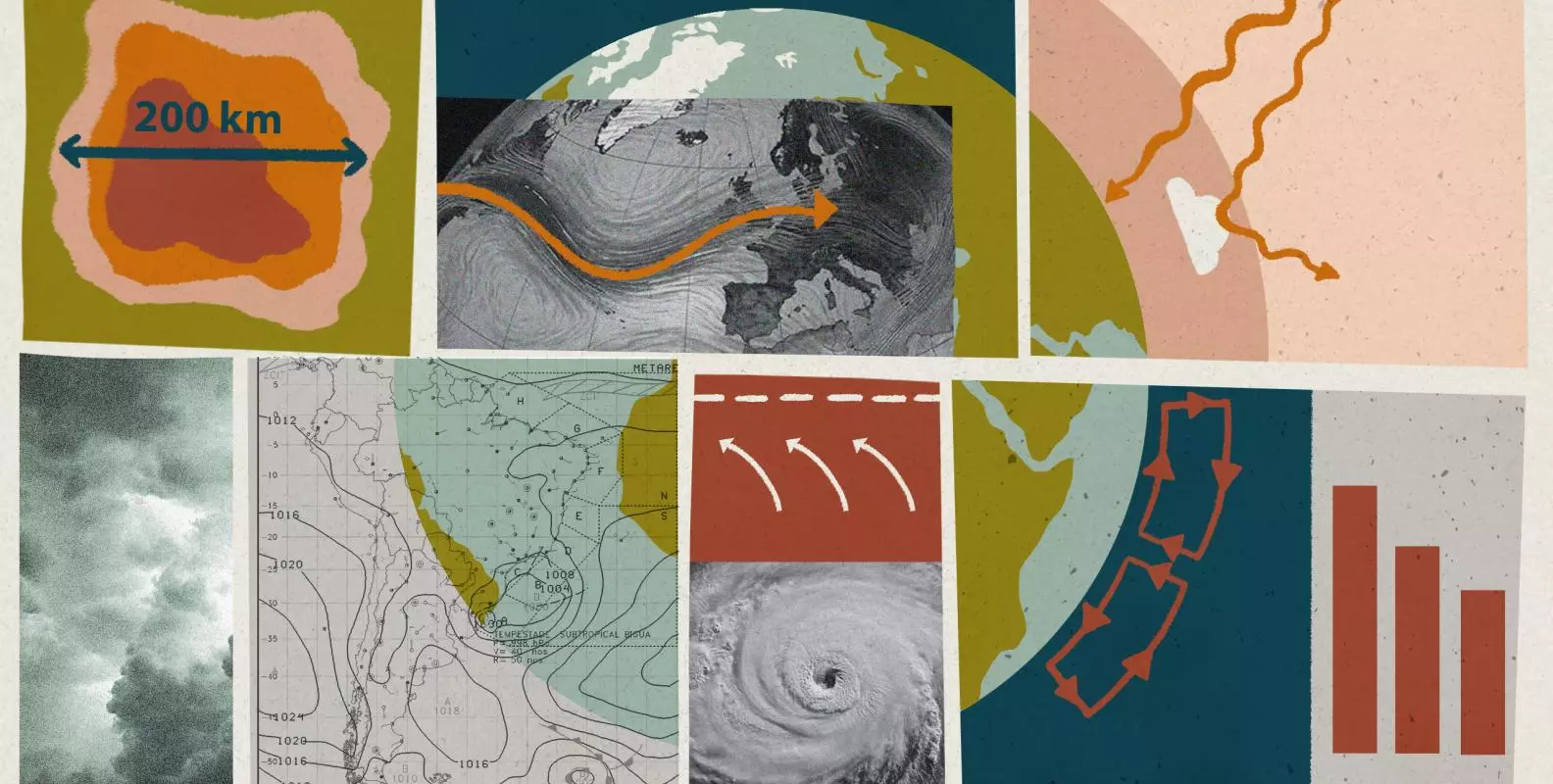
The physics of the weather and climate
We all have a clear picture in our head of what it means to predict the weather. We want to know whether it will be warm or cold, sunny or cloudy, calm or windy, precisely where we live, over the next few days.
When we talk about predicting the climate, we are not able to provide this level of precision. The climate refers to the expected weather at a given location. This includes the average for a given time of year, but also how changeable it is. We therefore ask questions about how the expected weather will change: Will average temperatures get hotter? Will temperatures vary more from week to week? Will storms get more severe? Will rainfall dry up? These questions matter - their answers determine the crops we will grow in the future, and how we build resilience to extreme events under climate change
To predict the weather or climate, we need to understand it. To understand it, we must understand the behaviour of the air - our atmosphere - and how it interacts with the oceans and land, with ice-sheets and mountains, and many more aspects of the Earth. This brings together many strands of physics.
Weather and climate explainers
Here you can find a set of 'explainers' linking ideas from GCSE and A-level physics to real weather and climate phenomena.
Find out more
To find out more about the physics of weather and climate, why not dip into one of these popular science books, how-to books, or YouTube channels?
Books (in no particular order):
- Chaos, by James Gleick
- Beyond Global Warming, by Broccoli and Manabe
- The Primacy of Doubt, by Tim Palmer
- Weather Analysis and Forecasting Handbook, by Tim Vasquez
- Jet Stream: A Journey Through our Changing Climate, by Tim Woollings
- The Cloud Book, by Richard Hamblyn
- Firmament, by Simon Clark
- Clouds in a Glass of Beer: Simple Experiments in Atmospheric Physics, by Craig Bohren
- What Light Through Yonder Window Breaks? More Experiments in Atmospheric Physics, by Craig Bohren
- Philip's Guide to the Weather, by Ross Reynolds
- Understand the Weather, by Peter Inness
- Weather: A Concise Introduction, by Gregory Hakim and Jerome Patoux
Youtube channels:
- Climate Change in Physics, by Royal Meteorological Society
- Some weather and climate fundamentals explained, by the Met Office